

Article: How Often Should You Wash Pet Bowls?
How Often Should You Wash Pet Bowls?
Wash a bowl that held wet food after every meal, and wash dry food and water bowls every day. That is the schedule the CDC gives for dog and cat bowls. The FDA is a little stricter on food: it says to wash pet food bowls with soap and hot water after each use, kibble included. Whichever you follow, wash sooner if a bowl looks grubby or smells.
That's the answer. The rest covers what counts as a wash, the few times a wash isn't enough, and how to keep it up once the novelty wears off.
Quick answers
How often should you wash a dog's water bowl?
Every day. Tip out what's left, wash the bowl and refill it with fresh water. The CDC and the FDA both say daily.
Can a dry food bowl go a few days?
No. The CDC's schedule is every day for dry food too. Topping up a half-empty bowl leaves yesterday's crumbs at the bottom of today's breakfast.
Is rinsing enough?
No. A wash means soap or detergent, a scrub with a sponge or brush, then a rinse.
Can pet bowls go in the dishwasher with your own dishes?
Yes, if the bowl is labeled dishwasher-safe. The CDC says it's fine to run pet items with your dishes.
Is the kitchen sink okay?
Yes. The CDC says dog and cat bowls washed by hand can be washed in the kitchen sink.
Why it matters more than it looks
In a 2011 germ study by NSF, the public health standards organization, 22 families swabbed 30 everyday items around their homes. Pet bowls came fourth, behind only the kitchen sponge, the kitchen sink and the toothbrush holder.
That's no reason to panic. As the CDC points out, most of the bacteria pets carry don't cause illness. Some can make pets or people sick, though, and a bowl on the floor with food in it gives them every chance to build up.
Most of us wash less often than we'd guess. When researchers at North Carolina State University surveyed 417 dog owners, the most common answer was once a week, and 18% washed the bowl less often than every three months, or never. Fewer than 5% knew the FDA had any guidelines on it.
The encouraging part came next. Owners who followed the FDA's feeding and washing steps for one week significantly cut the bacteria on their dogs' bowls. Owners who carried on as usual saw no improvement.
How often to wash pet bowls, bowl by bowl
- Wet, canned or fresh food: after every meal. Don't leave leftovers out; the FDA says to refrigerate or throw out leftover canned and pouched food promptly.
- Raw food: after every meal. The CDC and the FDA both advise against feeding raw, because it is more likely to carry germs like Salmonella and Listeria. If you feed it anyway, the CDC says to wash your hands and clean everything the food touched.
- Dry food: every day, or after every meal if you follow the FDA. Empty the bowl instead of topping it up.
- Water: every day. A pet water fountain has more corners for grime to hide in, so take it apart and follow the maker's cleaning and filter schedule.
- Scoops and measuring cups: after each use, kept for pet food only. The FDA also says not to use the bowl itself as a scoop.
- Feeding mats: the CDC lists them alongside bowls as things to clean frequently. Wipe the mat whenever you wash the bowls, following its care label.
- The food storage bin: wash and dry it between bags of kibble, so old fat and crumbs don't carry over (FDA).
Step it up if anyone at home is more likely to get very sick from germs: the CDC names children under 5, adults 65 and older, pregnant women and anyone with a weakened immune system, and the same goes for young, older, pregnant or sick pets. There, the CDC advises cleaning more often and adding the disinfecting step below.
How to wash a pet bowl by hand
The CDC's steps:
- Wash with soap or detergent and warm water.
- Scrub with a sponge or brush. Do the inside, the rim and the base, which sits on the floor.
- Rinse off the soap and any remaining dirt.
- Air dry, or wipe dry with a clean towel. In the NC State study, the drying method made no measurable difference.
If the inside of a water bowl feels slippery, that's a biofilm: a thin layer that bacteria build to hold on to a surface. It's why a wash means a scrub, not a rinse and refill.
Heat helps. In the same study, bowls washed in a dishwasher or in water above 160°F came out with significantly fewer bacteria than bowls washed in cold or lukewarm water. That's far too hot for hands, so it's really dishwasher territory. At the sink, put on dish gloves and use the hottest water you can comfortably work with, within the bowl's care instructions.
Give the bowls their own brush, too. In NSF's study, the kitchen sponge was the germiest thing in the house.
Using the dishwasher
If a bowl is labeled dishwasher-safe, the CDC says any wash setting will clean it. To disinfect as well, use the high-temperature or sanitizing setting and the heated dry.
A 2023 study of 96 dog food bowls in Italy points the same way. Bowls washed by hand tended to carry more Enterobacteriaceae, the bacteria family that includes E. coli and Salmonella, than bowls washed in a dishwasher. Bowls used for wet food carried more bacteria than bowls used for dry food. None of the bowls tested positive for Salmonella, Campylobacter or the toxin-producing E. coli the researchers looked for, which is reassuring.
When to disinfect, and how
For most homes, a proper wash is enough. The CDC suggests disinfecting as well when someone in the house is more vulnerable to germs, as above, and every time you clean a sick pet's things. NSF goes further for dishes washed by hand and suggests sanitizing pet bowls once a week.
Check the bowl's care instructions first. Then, following the CDC's method for bleach:
- Wash and rinse the bowl first. Bleach works on a clean surface.
- Mix 2 ounces (1/4 cup) of household bleach into 1 gallon of water.
- Soak the bowl for at least 10 minutes.
- Rinse it well, and let it dry completely before your pet uses it.
Keep pets away while you work, and never mix bleach with other cleaners such as ammonia. A disinfectant spray or wipe should be EPA-registered and used exactly as its label says. With cats, avoid anything with "phenol" in the ingredients; the CDC warns phenols are very toxic to cats.
What about vinegar? The CDC says there isn't enough research on how well it cleans or disinfects. It kills some germs, not all, so the CDC sticks with soap for cleaning and a disinfectant for killing germs.
Check the bowl while it's in your hands
Washing is the best moment to look a bowl over. Retire anything chipped or cracked, glass and ceramic alike; our guide Are Glass Bowls Safe for Dogs? covers what to look for. Plastic picks up scratches, and bacteria cling more easily to a scratched surface, so a well-worn plastic bowl may be due for replacing.
If your bowls are hand-wash only
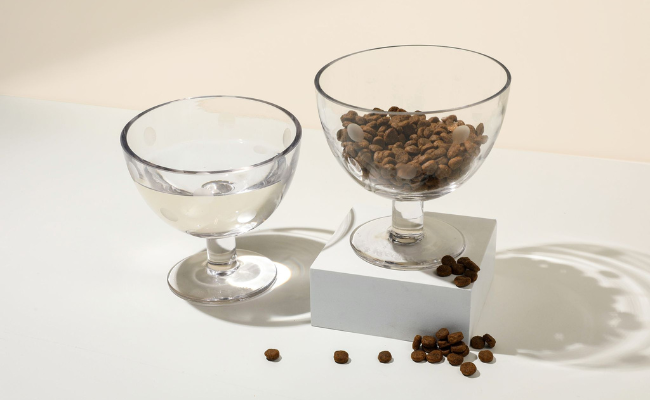
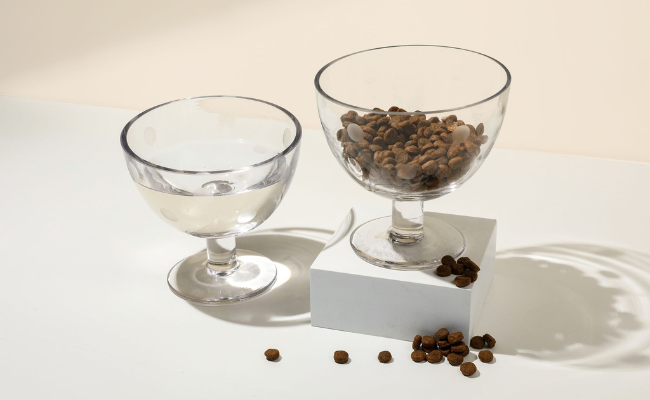
Ours are: our Glass Dog Bowl Set is hand-wash only, so here is the honest version. Everything above works for it, and clear glass makes it hard to miss when a wash is due. What you give up is the dishwasher's heat. If your routine depends on the dishwasher, or someone at home needs the extra care described above, a dishwasher-safe bowl will make life easier. Our comparison of glass, ceramic and stainless steel pet bowls walks through the trade-offs.
Making it stick
The hard part is keeping it up. In the NC State study, only 8% of the owners given the full routine said they were likely to stick with all of it. So make it easy on yourself:
- Keep two sets of bowls. Swap them at dinner, and the dirty pair gets washed with your own dishes.
- Tie it to something you already do, like the dinner dishes.
- Wash your hands before and after handling pet food. The FDA says 20 seconds with soap and hot water.
Tonight, run a finger around the inside of the water bowl. If it's slippery, you know where to start.
Sources
CDC. About Cleaning and Disinfecting Pet Supplies, February 18, 2026. Cleaning schedule, when to disinfect, hand-washing and dishwasher steps, bleach solution, disinfectant safety, phenols and cats, vinegar, kitchen sink.
CDC. About Pet Food Safety, January 30, 2025. Cleaning bowls, scoops and feeding mats; raw pet food; washing hands.
FDA. Tips for Safe Handling of Pet Food and Treats. Washing bowls and scoops with soap and hot water after each use; hand washing; not using the bowl as a scoop; raw pet food.
FDA. Proper Storage of Pet Food and Treats, content current as of May 23, 2024. Washing water bowls daily, leftovers, storage containers.
NSF. Clean the Germiest Home Items. The 2011 household germ study (22 families, 30 items) and its pet bowl cleaning advice.
Luisana E, Saker K, Jaykus L-A, Getty C. Survey evaluation of dog owners' feeding practices and dog bowls' hygiene assessment in domestic settings. PLOS ONE, April 6, 2022. Survey of 417 dog owners; bowl swabs before and after one week; hot water and dishwasher results; drying method; long-term adherence.
Raspa F, et al. Pet feeding habits and the microbiological contamination of dog food bowls: effect of feed type, cleaning method and bowl material. BMC Veterinary Research, December 7, 2023. Hand washing compared with the dishwasher; wet compared with dry food; pathogens tested.
Shannon Nowak, BS, LVT, RVT. Counseling Clients on Food Bowl Selection: What's the Dish? Today's Veterinary Nurse, March 11, 2022. Scratched plastic and bacteria.
Kecogee. Glass Dog Bowl Set. Care instructions checked November 23, 2026.
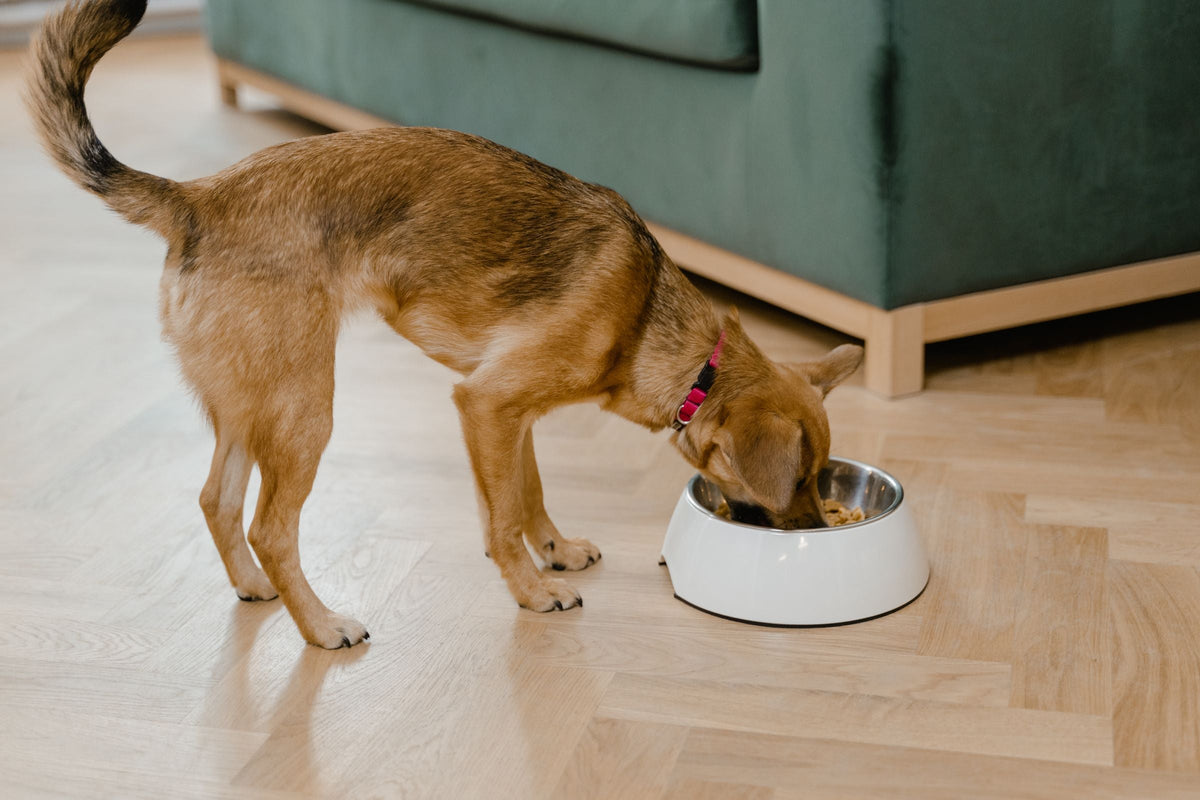
Photo by MART PRODUCTION / Pexels.




Leave a comment
This site is protected by hCaptcha and the hCaptcha Privacy Policy and Terms of Service apply.