


Article: What makes a comfortable space for your dog?
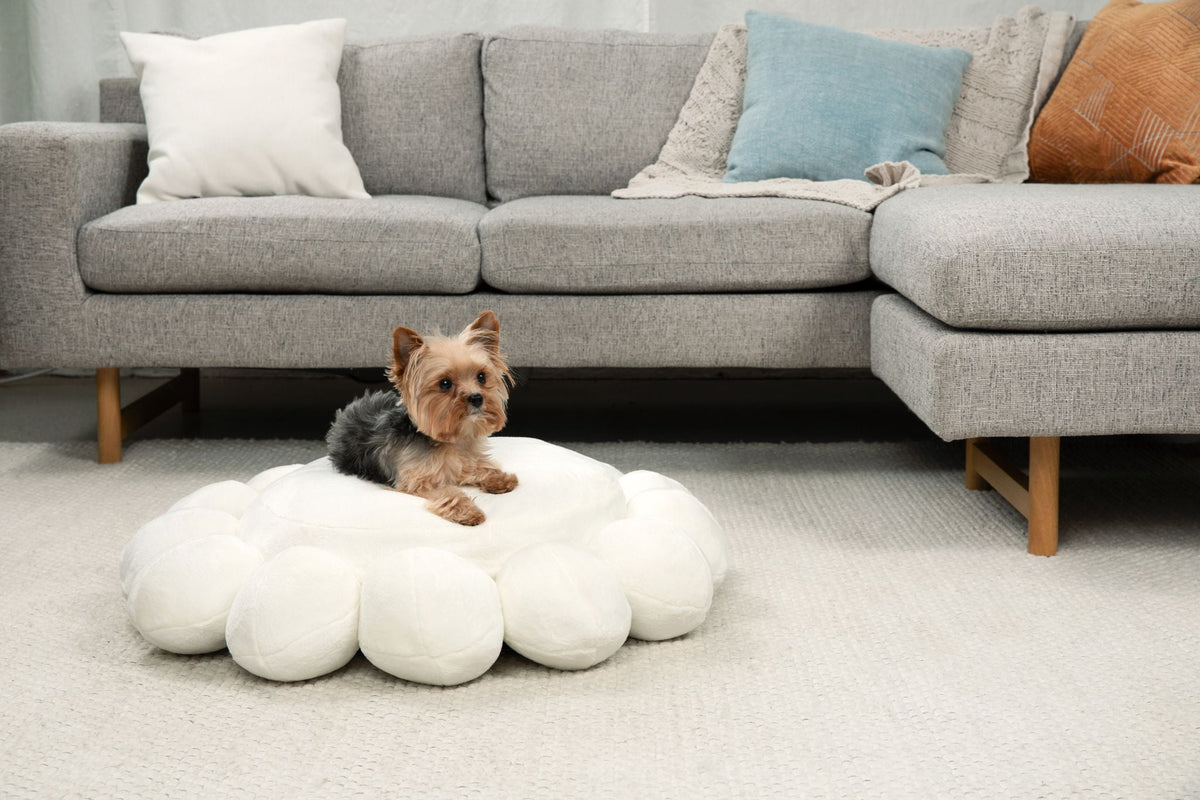
What makes a comfortable space for your dog?
Before moving your dog’s bed, watch where they rest for a few days. Notice whether they stretch out beside your desk, leave when the television comes on, or move to a cooler floor in the afternoon.
An owner-reported study of young dogs recorded a variety of sleeping positions and surfaces. The findings describe those dogs’ habits; they cannot tell us which setup will suit a particular dog. [1]
If it helps, jot down the location, time of day and resting position without disturbing your dog. Look for places they return to. These notes can guide changes to the room, but they cannot measure how comfortable a dog feels.
Balance quiet with company
Check where people walk, doors swing open and chairs slide back. A bed beside the sofa may work better a few feet away from the path to the kitchen.
Some dogs like being near familiar people while they rest; others choose more distance at times. Dogs Trust recommends starting with a familiar resting place, keeping foot traffic low, and allowing the dog to come and go freely. [2]
Where space allows, offer both a quieter retreat and a place near everyday family life. In a smaller home, that could mean a tucked-away corner in the same room. Keep the route open and let your dog choose which spot to use.
Leave room for the whole stretch
A bed can look generous when your dog is curled up and feel much smaller when they extend their legs. The RSPCA advises choosing enough space for the different positions a dog naturally uses, including stretching out. [3]
One practical way to check is to note the length and width your dog occupies when resting in an extended position, including their head and legs. Wait for a natural opportunity; there is no need to wake them or arrange their body for a measurement.
Compare that footprint with the usable sleeping surface of a bed. Raised edges and bolsters can take up part of its advertised width. If a listing gives only outside measurements, ask for the inner sleeping dimensions before deciding whether it will fit.
Check that your dog can turn, change position and get on and off easily. Use those observations and the sleeping measurements to assess fit; a breed label or weight range alone may not be enough.

Check the spot throughout the day
Visit the resting area at different times. A corner that is shaded in the morning may sit in direct sun after lunch. A doorway may become draughty when the rest of the house feels warm.
In warm weather, make a shaded, cooler resting place available, with fresh water and good airflow. PDSA recommends these features when creating a cool room for pets. [4] Keep your dog free to move away from a warm patch or an extra blanket.
Look at the approach as well as the resting surface. Does the bed slide when your dog steps onto it? Is there a clear route around nearby furniture? AAHA's guidance for senior pets recommends secure rugs or mats on slick floors, alongside clean, dry, adequately padded bedding. [5]
Choose bedding you can keep clean
Before choosing bedding, check which parts can be washed, whether they fit in your machine and how the care label says to dry them. A spare washable layer can make it easier to keep a resting place available while another is being cleaned.
The CDC gives weekly cleaning as an example schedule for pet beds and blankets, with more frequent cleaning when needed. Follow the item's care instructions and the directions on any cleaning product. [6]
Check beneath loose blankets, around seams and under the bed as part of the routine. Replace bedding when its condition means you can no longer keep it clean and usable.

Keep rest undisturbed
Ask everyone at home to leave your dog alone when they settle in their resting area. Explain the same rule to visitors before they reach down to greet a resting dog.
Dogs Trust advises giving dogs a safe space away from children and respecting their choice to withdraw. Adults still need to supervise interactions. [7]
If you share your home with several dogs, provide separate resting options so each can withdraw without having to share. The RSPCA recommends enough beds and hiding places to reduce competition over resources. [8]
Try one change at a time
Shift a bed out of a walkway, secure a slipping mat or offer another resting spot. Try one change at a time and watch whether your dog chooses to use the space over the next few days.
Sources
- Kinsman and colleagues — Sleep Duration and Behaviours, Animals, 2020
- Dogs Trust — Creating a safe space for your dog
- RSPCA — Choosing the Perfect Dog Bed
- PDSA — Helping pets in the heat
- AAHA — Communicating with Families of Senior Pets
- CDC — About Cleaning and Disinfecting Pet Supplies
- Dogs Trust — Dogs and children living happily together
- RSPCA — Creating a Good Home For Your Dog


Leave a comment
This site is protected by hCaptcha and the hCaptcha Privacy Policy and Terms of Service apply.